Image: The New Yorker
President Trump has once again put America first, unveiling a bold new reciprocal tariff plan aimed at leveling the global playing field and ensuring that American industries are no longer taken advantage of by foreign nations. In a fiery speech from the White House Rose Garden, Trump made it clear: the days of America rolling over to unfair trade policies are over.
“April 2, 2025, will forever be remembered as the day American industry was reborn.” Trump declared. For years, hardworking Americans were forced to sit on the sidelines while other nations got rich at our expense. But now, it’s our turn to prosper.
The Breakdown:
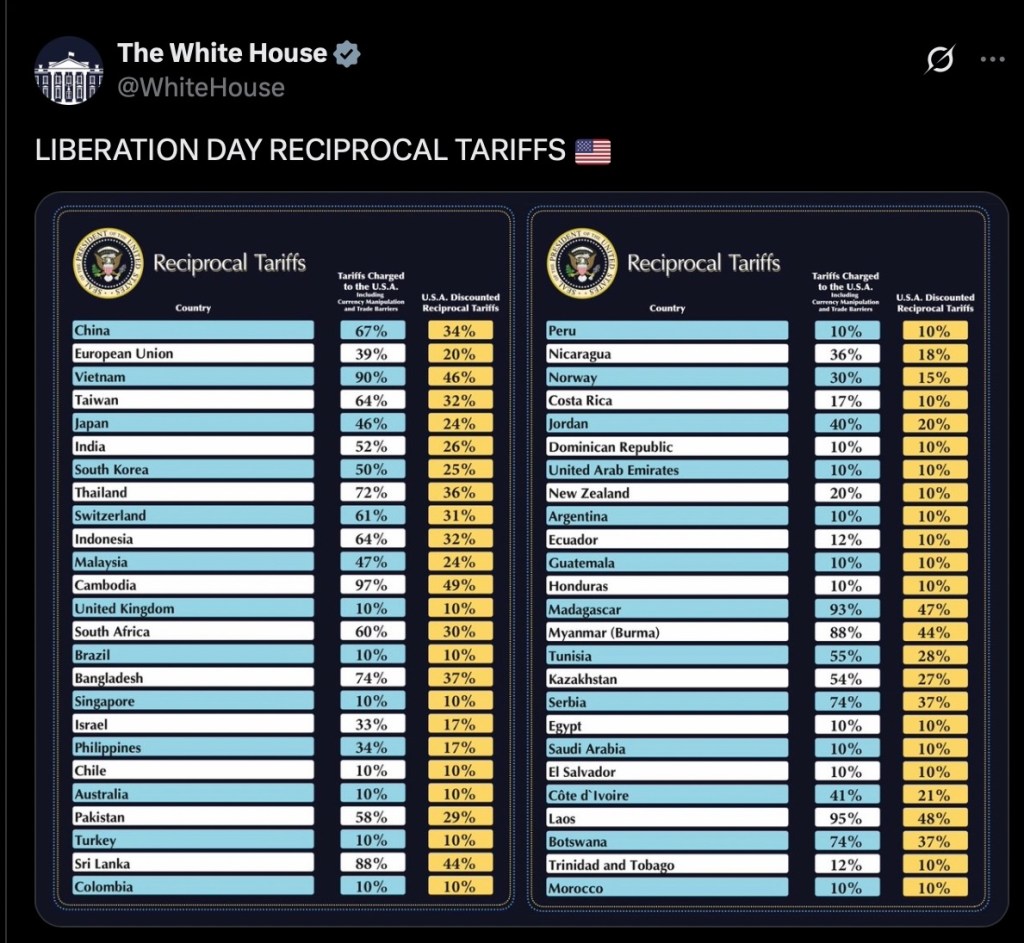
For decades, countries like China, Japan, and the European Union have slapped American-made goods with sky-high tariffs while the U.S. has generously kept its own trade doors wide open. The numbers speak for themselves:
- China: 67% tariffs and trade barriers; U.S. will impose 34% reciprocal tariffs.
- European Union: 39% tariffs and trade barriers; 20% reciprocal tariffs.
- Vietnam: 90% tariffs and trade barriers; 46% reciprocal tariffs.
- Japan: 46% tariffs and trade barriers; 24% reciprocal tariffs.
- India: 52% tariffs and trade barriers; 26% reciprocal tariffs.
- South Korea: 50% tariffs and trade barriers; 25% reciprocal tariffs.
- Taiwan: 64% tariffs and trade barriers; 32% reciprocal tariffs.
For too long, America has been the punching bag in international trade, with other nations lining their pockets at the expense of U.S. manufacturers and workers. Trump’s new tariff structure is simple: if a country slaps tariffs on American goods, the U.S. will impose the exact same rate on their imports. Fair is fair.
Trump’s tariffs are not just about fairness, they are about strength. The administration has long argued that free trade should also mean fair trade, and these new policies will force countries to lower their own tariffs if they want to maintain access to the U.S. market.
The Left’s Hypocrisy on Trade
Predictably, liberal pundits and the mainstream media wasted no time attacking the plan, regurgitating their usual fear-mongering about a “trade war.” But here’s the reality: America has already been in a trade war, and losing it for decades. The same Democrats who once championed “fair wages” and “American jobs” are now crying foul because Trump is actually doing something about it.
Where was their outrage when China imposed a 25% tariff on American automobiles while U.S. automakers paid only 2.5% to sell cars in China? Where was their concern when the EU charged American agricultural products up to 40% in tariffs?
The Trump administration has also floated additional measures, including a potential across-the-board tariff of up to 20% and targeted tariffs on industries such as steel, aluminum, semiconductors, and pharmaceuticals.
In addition, the newly formed “External Revenue Service” within the Commerce Department will oversee tariff collection to ensure foreign companies are paying their fair share.
What Comes Next?
The administration’s Tariff Team, led by Treasury Secretary Scott Bessent and U.S. Trade Representative Jamieson Greer, has already begun negotiations with foreign governments.
The message is clear: If countries want access to the U.S. market, they need to play by the same rules. Some nations, fearing economic retaliation, have already expressed interest in cutting tariffs to avoid higher costs.
The impact of Trump’s tariffs will be felt immediately. American manufacturers will be incentivized to expand production domestically, creating jobs and increasing wages. Meanwhile, foreign companies will finally have to compete on equal footing, ending the days of America being treated as the world’s economic doormat.
Incentivizing our nation to bring back it’s own production to the homeland, eventually leads to a fruition of new labor and job opportunities, which then leads to the lower cost of goods made in the U.S.A.
For too long, global trade has been a rigged game. But under Trump, America is no longer playing by their rules. Now, it’s their turn to either adjust, or get left behind.
 Republican Voices, No Holds Barred.
Leave a comment